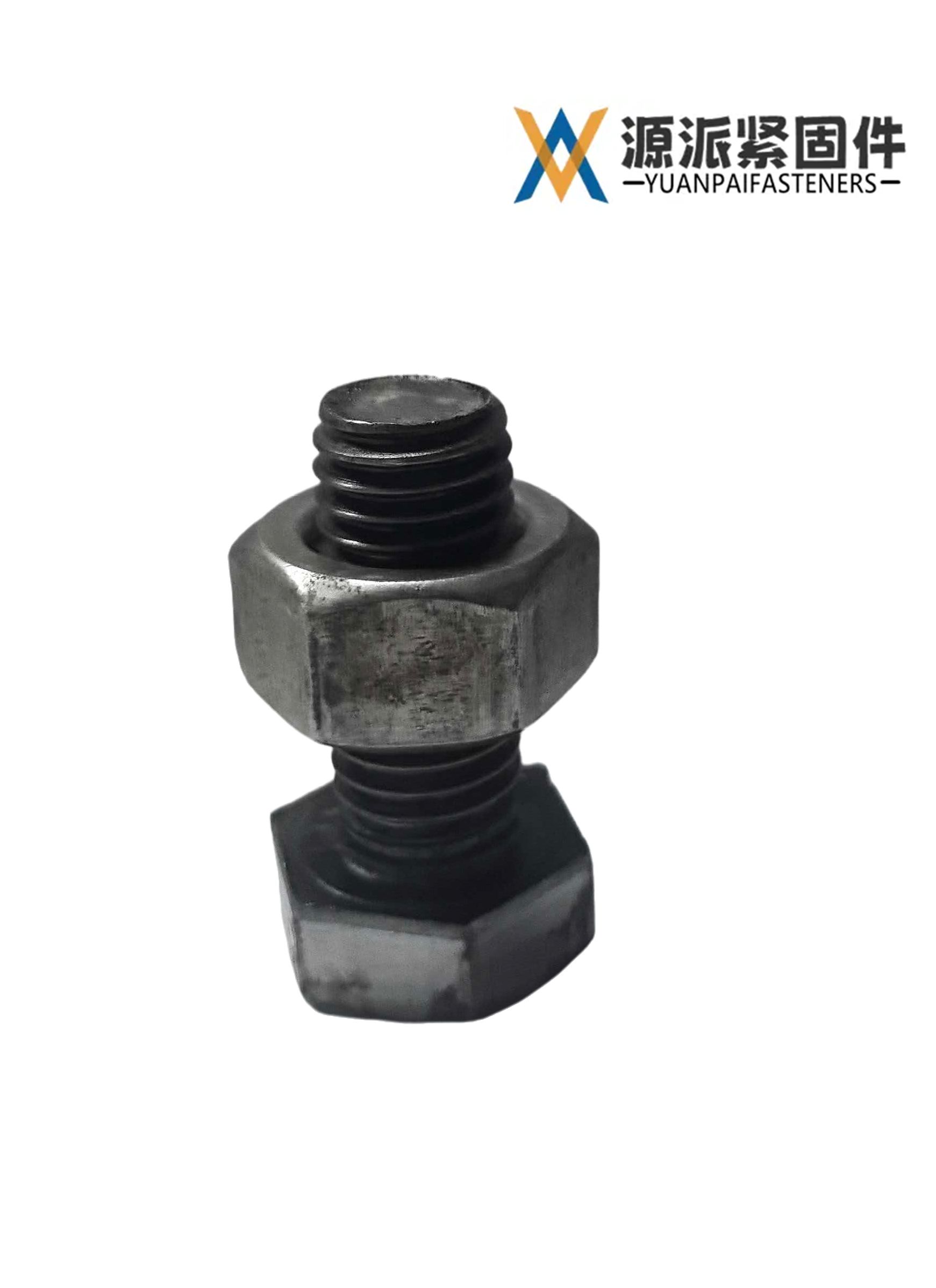
Sales Success Case: Break Through Standards with Expertise, Secure the Key Steel Structure Project with Quality
This case records the whole process of our company’s bidding and successful award for the centralized procurement of high-strength bolts for a municipal key steel structure bridge project. As an annual benchmark livelihood project, it features a massive steel structure volume, complex load conditions and stringent acceptance standards. All core beam-column joints, bridge splicing joints and seismic force-bearing joints must adopt high-standard high-strength bolts. Substitution by ordinary bolts and entry of non-standard or downgraded products are strictly prohibited.
At the preliminary stage of the project, the owner, general contractor and supervisor jointly imposed strict controls on material access. Many competing suppliers impacted the quotation system with low-price bidding, ambiguous parameters and simplified processes, resulting in fierce market competition. As the person in charge of our project, I adopted a four-dimensional approach covering technology, quality, performance and service, breaking away from the trap of pure price competition. We convinced the client with professional solutions and eliminated concerns via deliverable services. Eventually, we won the tender and fulfilled the contract successfully, achieving zero quality defects, zero acceptance rectifications and zero schedule delays throughout the project.
Through initial technical communication, I accurately identified the core concerns, which are common challenges in high-strength bolt procurement for large-scale infrastructure projects:
First, extremely high safety risks. Bridge structures sustain long-term dynamic vehicle loads, wind-induced vibration and temperature expansion & contraction. Ordinary bolts rely on bolt shanks to resist shear and bearing force, prone to loosening, slippage and fatigue deformation. Once joint failure occurs, it will trigger irreversible safety accidents. The client adopts zero tolerance for material grades and mechanical performance.
Second, widespread irregularities in the market. Counterfeit products prevail in the industry, including Grade 8.8 bolts passed off as Grade 10.9 bolts, reclaimed bolts and products with non-standard heat treatment. Falsified parameter marking and test reports are commonplace. The client cannot verify product authenticity merely by quotations, and is in urgent need of traceable, testable and fully compliant suppliers.
Third, high technical thresholds for construction works. Most suppliers only deliver goods without technical support. The installation of high-strength bolts imposes strict requirements on preload, torque coefficient, sequence of initial tightening & final tightening, and treatment of faying surfaces. Non-standard construction may cause hidden hazards even if the bolts themselves are qualified. The client demands matching on-site technical services.
Fourth, non-negotiable construction schedule. The project has a tight timeline with critical milestones. Material supply disruptions or rework caused by unqualified batches will directly delay overall project delivery. The client sets strict requirements on supply stability and emergency response speed.
Six suppliers participated in this bidding. The sales strategy adopted by most competitors merely focused on price competition: they kept cutting quotations, deliberately blurred the core differences between Grade 8.8 and Grade 10.9 bolts, friction-type and bearing-type high-strength bolts. Some even suggested downgrading to ordinary high-strength bolts for partial core joints to cut costs.
Such low-price schemes seem cost-effective, yet they completely ignore the dynamic load characteristics of bridge projects. They fail to satisfy structural requirements for seismic resistance, fatigue resistance and anti-slip performance, carrying severe long-term hidden risks. For this reason, the client remained prudent and refused to finalize the low-price bidder, which created the core opportunity for us to secure the deal.
Fifth, performance guarantee: rigid delivery schedule matching.
In accordance with the construction progress, our company formulated a phased and zoned supply plan. We prepared stock in advance and delivered goods on demand, establishing dedicated emergency inventory for the project. Emergency replenishment requests from site can be responded to within 24 hours. There were no supply interruptions, delivery delays or incorrect/omitted shipments throughout the process, perfectly matching the construction rhythm of the project.
A genuine win-win outcome never relies on compromise or concession from one party. Instead, it hinges on leveraging professional expertise to meet high standards, safeguarding engineering safety with consistent quality, and achieving long-term reputation and sustainable cooperation for both sides through reliable contract fulfillment.