Key Takeaways
A usable RFQ needs 7 things: standard, grade, size, quantity, coating, packaging, and delivery — miss any and you'll get apples-to-oranges quotes.
Always specify the exact standard (DIN 931 vs DIN 933 vs GB/T 5782) — they look similar but have different thread lengths and tolerances.
Quantity matters: MOQ for standard bolts is usually 1 carton (25-50kg), but price breaks happen at 1 ton, 5 tons, and container load.
Ask for material certificates (EN 10204 3.1) and test reports with every quote — a supplier who can't provide them isn't worth your time.
Quick Answer
A usable fastener RFQ needs 12 fields: standard, grade, size, coating, quantity, packaging, certification, inspection level, lead time, shipping terms, target price, and application context. Missing any one of these means the quote is either wrong or padded with contingency.
You send an RFQ for "M16 hex bolts, 10.9 grade" to three suppliers. You get three quotes back — and the prices differ by 40%. What happened?
More often than not, the problem isn't the suppliers. It's the RFQ. If your request is vague, each supplier fills in the gaps differently. One quotes DIN 931 (half thread), another quotes DIN 933 (full thread). One quotes zinc plated, another quotes black oxide. One quotes per piece, another quotes per kg. You're not comparing the same product.
After 15 years in this business, I've seen hundreds of RFQs. Here's the checklist I use — and what I tell every buyer to send.
A buyer in Canada once sent us an RFQ that said only: "M16 bolts, 50,000 pcs, best price." We quoted $0.42/pc for grade 8.8 zinc-plated DIN 933. Another supplier quoted $0.28/pc. The buyer took the cheaper quote — and received grade 4.8 bolts with no coating, no certs, in bulk bags instead of cartons. The re-order cost them $0.45/pc plus $1,800 air freight to make up time. The $0.14 "savings" turned into a $8,500 loss. A proper RFQ would have prevented this entirely.
The RFQ That Saved a US Contractor $18,000
A construction buyer in Florida sent us an RFQ for "hex bolts, grade 8, 3/4 inch." We replied with three questions: full thread or partial? UNC or UNF? Hot-dip galvanized or plain? He came back saying his previous supplier just shipped "whatever" and half didn't fit. We specified ASTM A354 grade BD, UNC, partial thread, HDG — and his total landed cost was $18,000 lower because he only paid for what he actually needed.
The 7 Things Every Fastener RFQ Must Include
1. Exact Standard and Part Number
"Hex bolt" is not enough. Specify the exact standard: DIN 931 (half thread), DIN 933 (full thread), GB/T 5782, ANSI/ASME B18.2.1, ISO 4014, etc. These standards have different thread engagement lengths, head heights, and tolerance classes.
For structural bolts, specify GB/T 1228 (large hex head) vs DIN 6914 vs ISO 7412. They're not interchangeable — the head dimensions and wrench sizes differ.
2. Material and Strength Grade
Specify both the material (carbon steel, alloy steel, stainless 304, stainless 316, etc.) and the property class (4.8, 8.8, 10.9, 12.9, A2-70, A4-80). "High strength" means nothing — 8.8 and 12.9 are both "high strength" but have very different prices and applications.
For stainless, specify A2 (304) vs A4 (316). A4 costs about 30-50% more but is essential for marine or chloride environments.
3. Size and Dimensions
Thread diameter (M6, M8, M10...), length (in mm), and thread pitch if non-standard. For standard metric coarse thread, pitch is implied (M10 = 1.5mm, M16 = 2.0mm), but if you need fine thread, say so explicitly.
Also specify tolerance class if needed: 6g is standard for bolts, but some applications require 8g or custom tolerances.
4. Quantity
Give the exact quantity in pieces, kilograms, or tons. And be realistic — ordering 50 pieces of M16 10.9 bolts will cost more per piece than ordering 5 tons. Price breaks typically happen at:
- 1 carton (25-50kg) — sample / small project pricing
- 1 ton — standard production pricing
- 5-10 tons — bulk discount
- Full container (20-25 tons) — best pricing, lowest per-unit freight
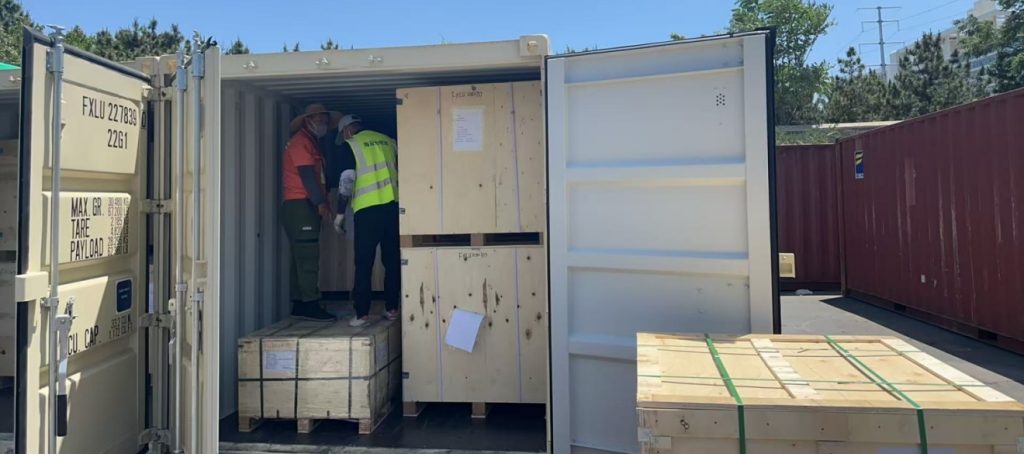
▲ Container loading at our warehouse — quantity directly affects both unit price and freight cost
5. Surface Treatment / Coating
Specify exactly: plain (black), zinc plated (blue-white, yellow, black), hot-dip galvanized, Dacromet/zinc flake, mechanical galvanizing, or PTFE coated. Don't say "galvanized" — that could mean electro-zinc or HDG, and the price and performance are completely different.
For HDG, specify whether threads need to be over-tapped (tapped oversize to accommodate the zinc thickness). This is a common source of field problems.
6. Packaging Requirements
Standard packaging is cartons (25kg or 50kg) on wooden pallets. But if you need: labeled cartons with your logo, individual poly bags, bulk in woven bags, or special pallet sizes — say so. Custom packaging adds cost and lead time.
For export, specify ISPM 15 heat-treated pallets (required for most countries) or plastic pallets (no fumigation needed).
7. Delivery and Incoterms
Specify: delivery date needed, shipping method (sea, air, express), and Incoterms (EXW, FOB, CIF, DDP). A quote without Incoterms is incomplete — FOB Shanghai and DDP Los Angeles have very different total costs.
Also mention if you need the goods consolidated with other suppliers' cargo (LCL) or if you're filling a full container (FCL).
What to Ask For Alongside the Quote
Don't just ask for a price. Ask for these documents with every quote:
- Material certificate (EN 10204 3.1 or 3.2) — proves the steel grade and chemical composition
- Test report — hardness, tensile strength, yield strength, elongation
- Coating thickness report — for plated or HDG bolts
- Sample availability — can they send free samples before you commit?
- Production lead time — from PO to shipment, in days
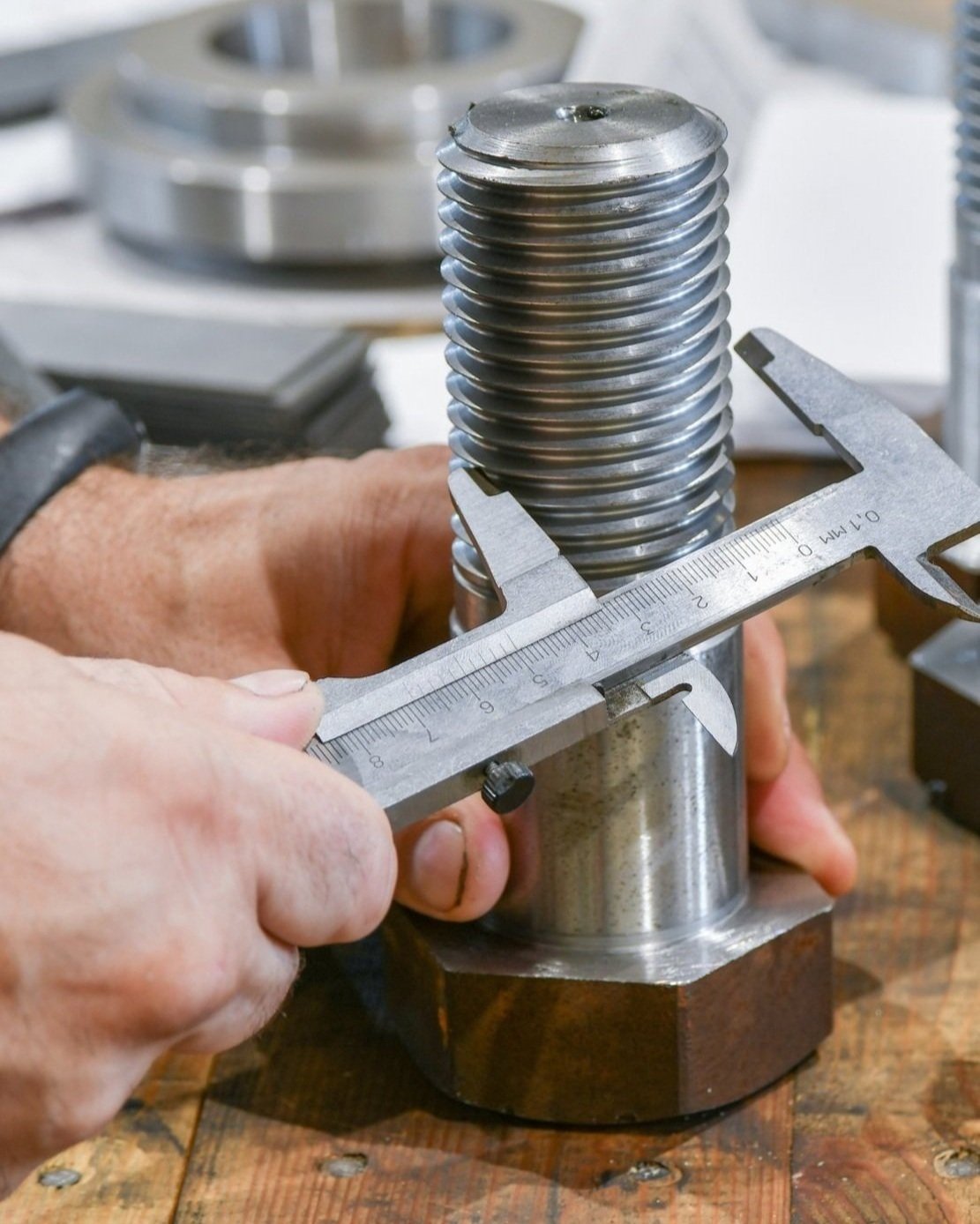
▲ Dimensional inspection — every batch should come with a test report, not just a price
A supplier who hesitates to provide these documents is telling you something. I've had buyers tell me "but their price is 15% lower!" — and then they find out the bolts are 8.8 grade sold as 10.9, or the coating is 5 microns instead of 12. The discount disappears fast when you have to reorder.
For more on evaluating suppliers, see our supplier audit checklist. And if you're planning inventory across multiple orders, our inventory planning guide for overseas buyers covers the math.
RFQ Template You Can Copy
Here's a template I recommend. Fill in the blanks and send it to every supplier — you'll get comparable quotes back:
RFQ — Fasteners
1. Standard/Part No: ________ (e.g. DIN 931)
2. Material/Grade: ________ (e.g. Carbon Steel, Class 10.9)
3. Size: M____ x ____mm, pitch ____ (coarse/fine)
4. Quantity: ____ pcs / ____ kg / ____ tons
5. Coating: ________ (e.g. HDG, zinc plated yellow)
6. Packaging: ________ (e.g. 25kg cartons, ISPM15 pallets)
7. Delivery: Needed by ____, Incoterms ____, port ____
8. Please include: material cert, test report, coating thickness report, lead time, sample policy
FAQ
Q: How many suppliers should I send an RFQ to?
A: 3-5 is ideal. More than that and you'll spend too much time comparing; fewer and you won't know the market price. Always include at least one factory-direct supplier (like us) and one trading company to compare.
Q: Why do quotes vary so much for the same specification?
A: Common reasons: different steel sources (mills vary in price and quality), different coating thicknesses, different overhead structures, and some suppliers quote "similar" products instead of exact specs. Always ask for the exact standard and material cert.
Q: Should I always go with the lowest price?
A: No. In fasteners, the lowest price usually means one of: lower grade steel, thinner coating, skipped heat treatment, or no inspection. The cost of a failed bolt in the field is 10-100x the savings on the purchase price.
Q: How long should I wait for quotes?
A: Standard items: 1-2 business days. Custom or non-standard items: 3-5 days. If a supplier takes more than a week to quote standard bolts, they're probably not the right partner for urgent orders.
Q: Can I mix different sizes in one order?
A: Yes — we offer mixed container loading, which is great for buyers who need a range of sizes but don't need full container quantities of each. This saves significantly on freight compared to ordering each size separately. Ask us about mixed container pricing.
A good RFQ doesn't guarantee the best price, but it guarantees you're comparing the same product. And in fasteners, that's half the battle.
Need a reliable custom fastener manufacturer and supplier? Yuanpai manufactures bolts, nuts and washers to your drawings and project specifications, with full material traceability and mill test reports.